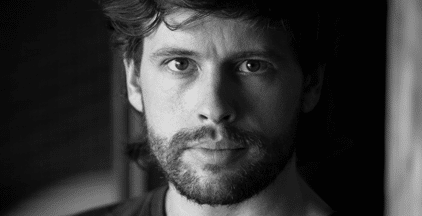
“It’s so important to build trust through honesty”
We have to make our clients' lives easier, be good to work with, and deliver above and beyond expectations

Melbourne, July 12th, 2023
FutureLabs is a global creative company, using innovation to evolve ideas into world-class work, an approach they call creative innovation. With offices in Melbourne, Auckland, Shanghai, Singapore and Ho-Chi Minh, the agency’s diverse team of creatives and technologists strive to be the best at what we do, making the complex simple.
Daniel Hewitt is the CEO and Co-Founder of FutureLabs, based in Melbourne. In an interview with TIA, he described how his career path led him to start the agency and listed the lessons learned in the process. He also highlighted the qualities that make FutureLabs different from the rest of the agencies and gave advice to young creatives.
To kick things off, what do you like the most about living in Melbourne?
Sport, food and coffee. Melbourne has it all. Do yourself a favour and try to attend a sporting match at the Melbourne Cricket Ground, the F1 Grand Prix, or the Australian Open tennis in summer. The arts and culture scene is also amazing, there’s always something to browse at the National Gallery of Victoria or the Australian Centre for the Moving Image.
What does a usual day look like for you at work?
I look after the growth of the agency, mainly focusing on business strategy and partnerships. I keep a keen eye on trends, and do a lot of research into the technology space. Being a washed up developer, I also contribute to our technical solutions and help with scoping of projects. I try to limit my meetings to 2 – 3 per day, and have recently resorted to minimising distractions like Slack, email and messaging. I find my days are so much more productive.
How did you find yourself co-founding FutureLabs?
I co-founded another digital agency when I was at university studying business and multimedia (that’s what we called it back in the day). Post university the business grew and we were fortunate enough to be acquired by a large media network. This whole process fast tracked my business nous and gave me a passion for doing my own thing. I went to work in the advertising industry for years afterwards to gain more experience, leading digital departments when digital was all about websites, apps and social media. Honestly, I got bored, it was all the same. I wanted to look at other forms of interactive media that allowed people to engage in another manner. I stumbled into the creative technology space and found a space that lit me up, provided diversity, complexity and creativity – I thought let’s do this, and the rest is history.
What key things have you learned about running the business since you started?
People and process. You’re nothing without being surrounded by good people that share your values (and my stupid sense of humour). That applies to staff, partners and clients. We hire based on cultural fit and technical skills second. There’s no point working with someone if you don’t get along. There’s no way you’re going to collaborate in a way that will bring the best out of the relationship.
Process (yes, it’s boring) but our craft is everything. We take so many calculated risks in what we do, and without good process and planning you’re destined to fail. Another crucial element is getting buy-in to the process from staff and clients. Without shared clarity it can result in unnecessary and time-consuming conversations instead of focusing on the delivery of the work.
Working with the right agency can be a valuable partnership. What attributes do you want people to associate FutureLabs with?
FutureLabs = Great people + great service + great outcomes.
I’m always banging on to the team that we are only as good as our last project. We have to make our clients’ lives easier, be good to work with, and deliver above and beyond expectations. We establish partnerships with everyone we work with, not client-supplier relationships. We really value the term “partnership”, it’s the only way to work. You have to ride the highs and lows together to deliver amazing work. It’s so important to build trust through honesty, it helps solve problems quickly in an effort to work towards one goal.
What recommendations would you give to clients to help streamline the process between their vision and your process?
We have this quirky (yet effective) thing called Rapid Realities. It’s a framework we apply when trying to explore a client’s vision. We see so many great ideas struggle to get them across the line. A great idea just doesn’t happen, there’s so many commercial realities that need to be factored in and explored. Feasibility, risks, money, timing, stakeholder agendas, viability and ROI. Our Rapid Realities framework helps creative agencies unpack this to provide them with confidence to sell in their final vision. I like to look at it as the final piece of the puzzle, where clients can demonstrate their vision and build trust with their stakeholders.
Looking back at FutureLabs’ recent portfolio of work, which project do you feel best represents the agency’s values and strengths?
Great question, there’s so many.
Value wise, we recently designed and built an Easter Egg for vision-impaired children to participate in an easter egg hunt. Using different forms of technology we were able to mould a solution that enabled these children to have their first ever hunt, something we all visually take for granted. Using sound and proximity technology, we were able to emit audio cues to the children whilst hunting for the eggs. To see how technology played an important part in this process made it all the more special.
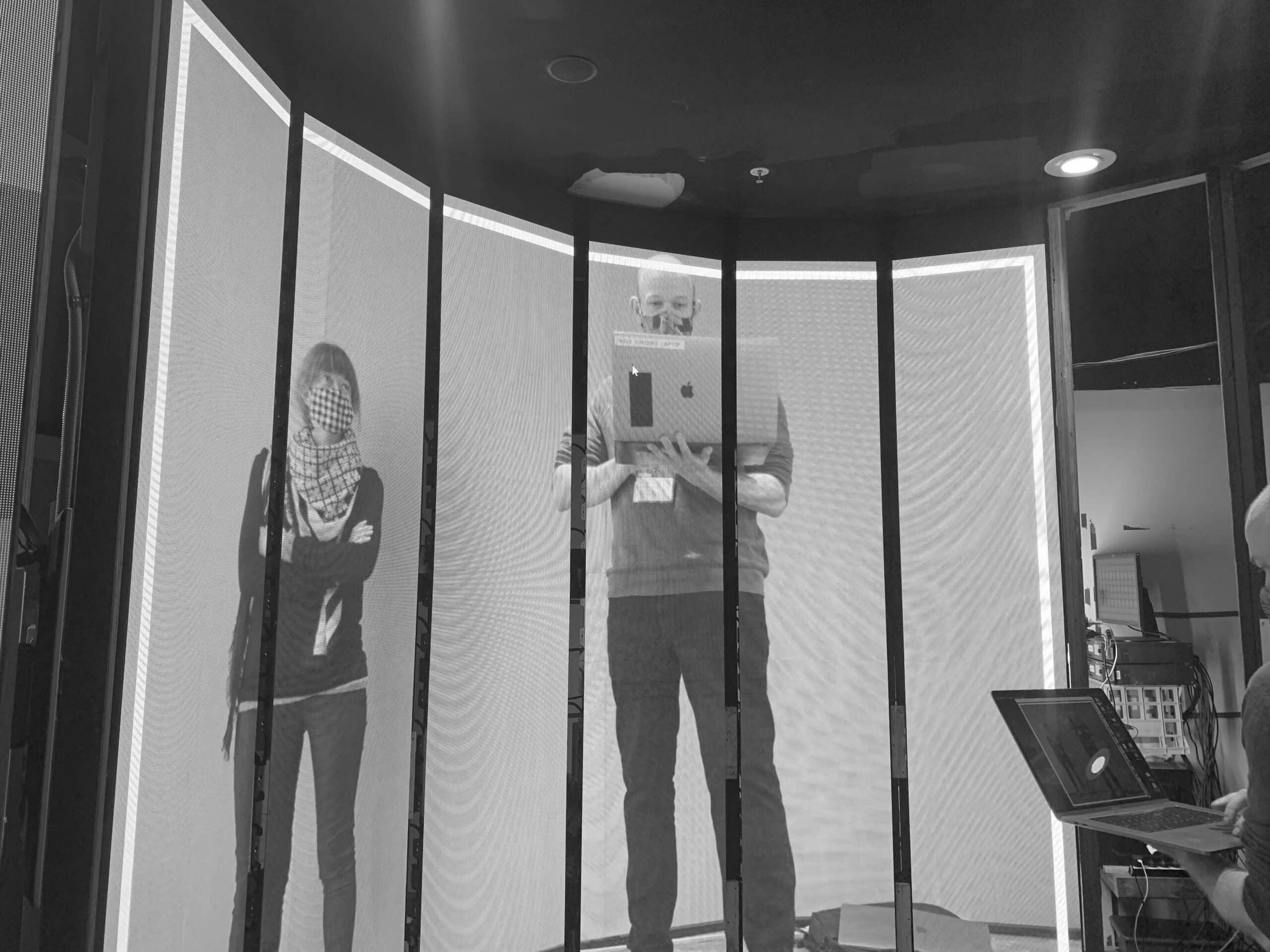
Strength wise, with various team members being in different parts of the world we are really proud of delivering projects on a global scale. Covid really exemplified this with our delivery of an interactive kinetic art installation in Singapore. With none of the team being able to travel we had to design and program the installation in Melbourne, build and test it in Shanghai, then deliver and remotely train the Singapore team to install. Being such a complex project, we relied on great communication and technical tools to be able to do everything remotely. Imagine testing a piece of code remotely from Melbourne on a large mechanical structure in Shanghai. Doing little things like setting up IP cameras in our Shanghai warehouse to watch a giant mechanical structure being controlled in real-time from Melbourne was pretty cool.
Based on your experience, what’s the most important factor that leads brands to create successful overseas experiences and to engage at a global scale?
Trust, respect and equality. When embarking on these types of projects everyone involved needs to be on the same page and trust one another. We are all there for a reason and are subject matter experts in our rights. Respecting each other, respecting the process and sharing an equal voice goes a long way when working on large projects.
Accessibility can be difficult to acknowledge, how do you ensure that your clients understand what you are recommending?
When embarking on a project, it’s key to understand the audience and the forms of interactivity proposed. It can be difficult as sometimes alternate forms of interactivity are needed to help ensure our experiences are accessible. This can lead to additional layers of budget, time and build complexity. Mapping out experiences based on different personas really helps clients understand the journey and why something has been proposed.
In your opinion, how can leadership create and then cultivate an inclusive and stimulating workplace?
Everyone in our agency has an equal voice. No hierarchy. Ideas and solutions can come from anywhere and anyone. I also like to promote a sense of fun when we are working, because things can get stressful. Seeing people smiling and laughing whilst working is great.
What is the best insight you can give to young creatives aspiring to move into a career in this industry?
Be open to feedback. It can be a very subjective space and opinions can differ. Be sure to understand the context of someone’s opinion before critiquing their stance. And ensure you have a great understanding and rationale of your idea. You will get asked “why” a lot and being able to stand proud and answer that question confidently goes a long way.
How would you describe the interactive industry in Melbourne?
Melbourne has a great tech and startup culture, with many famous start-ups such as Rome2Rio, Linktree and Airwallex. With Melbourne’s passion for sport, arts and big events there is a lot of opportunity for interactive companies to do great work in this space.
What kind of new tech stuff has blown your mind?
Everyone’s talking about AI and I’m a big believer in how this technology can enhance our lives. However, I’m really excited about mixed reality (or whatever buzz words people want to give it… XR, Spatial Computing) and the possibilities this can do to enhance people’s lives. We need to move past the gimmick of using AR on a mobile device and push the boundaries of other displays. We’re seeing bulky expensive headsets, but when this technology can become more accessible we’re on a winner. Think slimline glasses, a transparent window, a car windscreen. We’re seeing it slowly filter through and advancements in technology are gaining some traction. When it can crack the mainstream, and be used as a utility, look out.
From your personal standpoint, what is the greatest challenge of our time?
Interesting question. AI poses a challenge for so many reasons. I think people cannot rely on AI to be its source of truth. AI can be taught wrong things, and like a human it needs to understand and correct itself. I hope the next generation doesn’t rely on AI to think for themselves, losing their imagination and creativity. I hope they can use it to assist and enhance their lives in a positive way.
Where do you go if you want to relax in or out of town?
The Mornington Peninsula, south of Melbourne. Great beaches and some of the best golf courses in the world.
Please share a fun-fact that not many people know about you
I don’t know if this is fun, but I’m a perfectionist. It drives me crazy as well as my wife! I’ll tend to only attempt something if I know I can be good at it. It’s taken a few decades to get out of that zone, get uncomfortable and try things I might be bad at.
Daniel’s Working Preferences:
Early Bird or Night Owl?:
Both. I have young children, so sleep-ins are not an option. But when they’re in bed I find I can get some time at night
Usual breakfast:
I’m boring. Coffee and cereal, then another coffee
Favourite music genre or band:
Alternative Rock / Queens of the Stone Age
Last place travelled:
South East Asia. Indonesia and Vietnam
What was your favorite subject in school?:
Chemistry was fun, conducting experiments. Physical Education (sport) was always good for getting out of the classroom
The game you’re best at:
I wouldn’t say I’m good at it, but I’m addicted to golf. The world's most frustrating sport
Preferred spot in your city:
During summer, the beach side suburbs always have a great vibe. Whenever there’s a big sporting event on, the MCG is one of the greatest stadiums on the planet. The atmosphere is like no other
What makes a good day at work?:
Launching a new project and seeing the smiles on the team's faces. You know that they’ve all put in a lot of hard work and they get a small moment to stop and appreciate what we’ve all just achieved
Thanks Daniel!
- Learn more about FutureLabs
- Follow Daniel in social media:
- Follow FutureLabs in social media:
Agency to watch

Best in Breed since 1998. Lounge Lizard is a Digital Agency that Specializes in Brand Strategy, Website Design, Web Development, Mobile APP Development, Online Marketing, Social Media, Ecommerce, and SEOdigital experiences that move brands and businesses from now to next.
Featured agencies

134970 Views

115530 Views

109320 Views

91805 Views

88261 Views

83070 Views

74693 Views

61505 Views